If you’re single and tired of the unpredictable results of online dating, you may be ready to try something different. Perhaps dating apps haven’t delivered the kind of connection you’re looking for. You’re not particularly interested in spending every weekend at bars, and your busy schedule doesn’t leave much room for meeting new people. Meanwhile, most of your friends and family members are already in relationships.
You’ve probably tried different approaches, from joining social clubs and accepting the occasional blind date to hoping for a chance encounter in everyday places. But after so many disappointing experiences, the idea of working with a professional matchmaker may start to sound appealing.
Professional matchmaking offers a more personal approach to meeting potential partners. Instead of searching through endless profiles and hoping for the right connection, you work with a service that aims to understand your personality, preferences, and relationship goals before introducing you to compatible singles.
However, choosing a professional matchmaking service is not a decision to take lightly. You’ve likely already invested time, money, and emotional energy in other dating experiences. Professional matchmaking is generally a more significant financial commitment, so it’s important to understand exactly what you’re paying for.
The right service can make the dating process more focused and manageable. The wrong one can leave you disappointed and out of pocket.
So, how do you know which matchmaking company deserves your trust? What questions should you ask before signing a membership agreement?
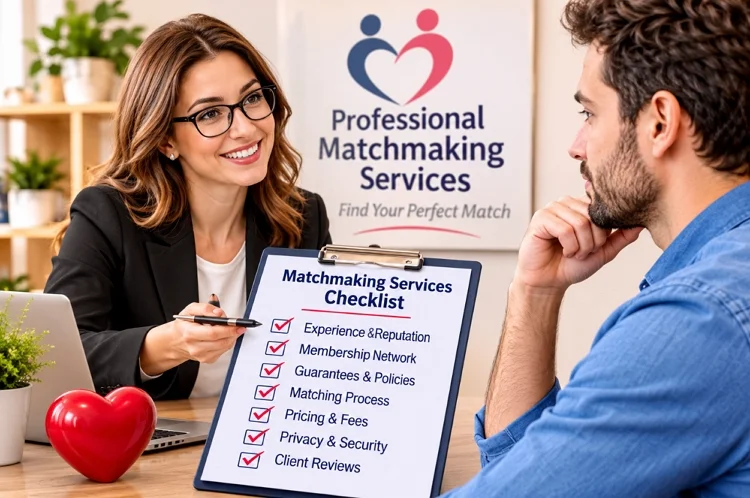
Drawing on nearly two decades of experience in the matchmaking industry, this checklist covers the important details to investigate before making your decision.
Professional Matchmaking Services Checklist: Questions to Consider
Before committing to a matchmaking agency, take the time to understand how it operates, who it serves, and what kind of experience it offers. The following questions can help you evaluate your options more confidently.
1. How Long Have You Been in Business?
Experience can tell you a lot about a matchmaking company’s history, reputation, and ability to maintain its operations.
Many small dating agencies and independent matchmaking businesses enter the industry with ambitious promises but struggle to remain active for more than a short period. A company that has operated successfully for several years may offer greater reassurance than a newly established service with little public history.
For example, a matchmaking company with more than ten years of experience has had time to develop its processes, build a client network, and establish relationships within the industry.
However, longevity alone doesn’t guarantee quality. Look beyond the company’s founding date and investigate its recent reputation, customer experiences, and record of delivering the services it advertises.
A few useful follow-up questions include:
- Has the company maintained consistent operations over the years?
- Has its management or ownership changed?
- Can it provide genuine client testimonials?
- Does it have a history of complaints or unresolved disputes?
A trustworthy matchmaking service should be comfortable discussing its background and explaining how its experience benefits members.
2. How Many Offices or Locations Do You Have?
The number of locations a matchmaking company operates can influence the size and geographical reach of its membership network.
A service with only one office may primarily introduce you to singles in a particular city or surrounding area. That could be perfectly suitable if you prefer dating locally.
However, if you’re open to meeting someone from another city or even another region, a company with multiple locations may offer more opportunities.
A wider network can be especially valuable for people who travel frequently, have flexible living arrangements, or are willing to consider long-distance relationships.
Ask the company whether its different offices share a common membership database and whether clients can be introduced to members registered in other locations.
Also, find out whether traveling to meet potential matches is entirely your responsibility or whether the company helps coordinate introductions.
Ultimately, the best geographical reach depends on your lifestyle and how far you’re genuinely willing to travel for a relationship.
3. What Guarantees Do You Offer?
Some professional matchmaking companies offer guarantees as part of their membership programs. These guarantees may relate to the number of introductions, the duration of the service, or continued assistance until certain relationship goals are reached.
For example, Lifemates Canada has been cited as an example of a matchmaking company offering a Relationship Goal Guarantee through certain membership programs.
However, it’s essential to examine the actual terms rather than relying on the word “guarantee” alone.
Ask questions such as:
- What exactly does the guarantee cover?
- Does it promise a specific number of introductions?
- Does the membership continue if you haven’t met someone compatible?
- Are there additional fees for extended services?
- Are there conditions that could make the guarantee invalid?
Remember that no matchmaking company can guarantee genuine romantic chemistry, mutual attraction, or marriage. These outcomes depend on the people involved.
A meaningful guarantee should explain what the company is responsible for delivering, without making unrealistic promises about the future of your relationship.
4. What Are Your Business Hours?
Communication is an important part of a successful matchmaking experience. You need to know whether the company’s operating hours fit comfortably around your professional and personal commitments.
This becomes particularly important if you work unusual shifts, travel regularly, or have a demanding schedule.
Imagine having an important question about a potential introduction but discovering that the matchmaking office is only available during hours when you’re working.
Before signing up, ask:
- What are your regular business hours?
- Are evening or weekend appointments available?
- Can you communicate with your matchmaker by email or telephone?
- Is there someone available to assist you when your assigned matchmaker is unavailable?
A professional matchmaking service should have a clear communication process and reasonable ways to accommodate clients with different schedules.
5. How Do You Find Your Clients and Advertise Your Services?
The way a matchmaking company attracts new members can offer useful insight into its visibility, marketing strategy, and potential reach.
A company that relies on only one small local advertisement may have a more limited recruitment strategy than an agency with an established online presence and several marketing channels.
Start by searching for the company’s name online.
Does it have a professional website? Can you find independent reviews? Does it maintain active social media accounts? Is it visible in relevant search results?
You can also investigate whether the company uses other advertising channels, such as:
- Search engine advertising.
- Social media campaigns.
- Television and radio advertising.
- Local and national publications.
- Direct mail campaigns.
- Community events and networking activities.
A diverse marketing strategy may help a matchmaking agency attract singles from different backgrounds and locations.
However, advertising expenses and company size should not be treated as proof of matchmaking quality. A smaller agency can still provide excellent personal service, while a heavily advertised company may not necessarily deliver better results.
What matters most is whether the company attracts genuine, eligible singles who match the preferences and relationship goals of its members.
6. How Do You Match Clients and Determine Compatibility?
This is arguably one of the most important questions to ask any professional matchmaking service.
You need to understand how the company decides which people might be compatible and what information it considers before arranging an introduction.
Some matchmaking agencies rely on detailed personal interviews, while others combine human judgment with personality assessments and compatibility questionnaires.
Ask how the company evaluates factors such as:
- Personality and communication style.
- Personal values and lifestyle.
- Long-term relationship expectations.
- Family and future goals.
- Education and professional background.
- Age preferences and geographical location.
- Physical attraction and personal preferences.
You should also understand how potential matches are selected.
Does a professional matchmaker personally review your profile and recommend suitable introductions, or does the company rely primarily on automated systems?
Another important consideration is how introductions are arranged. Will your matchmaker explain why someone was selected for you? Will you receive enough information to make an informed decision before agreeing to meet?
A good matchmaking process should consider more than a checklist of superficial preferences. Compatibility involves understanding how two people might connect, communicate, and build a relationship over time.
If you’re still exploring different ways to meet potential partners, understanding your dating options can help you decide whether professional matchmaking is the right next step.
7. What Is Your Interview and Screening Process Like?
A professional interview is an important part of understanding who you are and what you’re looking for in a relationship.
Many personal matchmaking services arrange one-on-one consultations with prospective clients. These conversations allow the matchmaker to learn about your personality, relationship history, lifestyle, and expectations.
The quality of this process can make a significant difference in the introductions you receive.
During your consultation, pay attention to whether the matchmaker asks thoughtful questions and takes time to understand your answers.
You should also ask how the agency verifies the information provided by its members.
Important questions include:
- Is there an in-person or video consultation?
- Do you verify members’ identities?
- How do you screen prospective clients?
- Are marital status and relationship intentions checked?
- How do you handle inaccurate or misleading information?
- Are interviews conducted by experienced matchmakers?
An in-person interview can be valuable, but it isn’t the only acceptable approach. Reputable companies may use secure video consultations, particularly when serving clients in different cities or countries.
What matters is that the screening process is thorough, consistent, and designed to protect members.
Be cautious of agencies that accept memberships without meaningful conversations or provide very little information about their verification procedures.
8. What Is Your Website Address?
Always visit the matchmaking company’s website before making a commitment.
A professional website should provide clear information about the business, its services, membership options, and the process of working with its matchmakers.
At a minimum, look for:
- Company history and background.
- Office locations and contact information.
- Details about matchmaking services.
- Membership options and pricing information.
- An explanation of the matching process.
- Privacy policies and membership terms.
- Testimonials or independently verifiable reviews.
You should also check whether the website is regularly maintained and whether the company’s contact details are consistent across its online profiles.
A business without an established website may be harder to evaluate, particularly when you’re considering a service that requires a substantial financial investment.
However, a polished website doesn’t automatically mean that a company is trustworthy. Verify its claims independently and speak directly with a representative before making a decision.
9. How Much Do Your Services Cost, and What Is Included?
Professional matchmaking is often more expensive than conventional online dating subscriptions. That’s why understanding the complete cost structure is essential.
Some companies offer different membership levels, each with its own pricing, introduction limits, and additional services.
Ask for a detailed explanation of what your membership includes.
For example:
- How many introductions are included?
- Is there a limit on the number of matches?
- Are personal consultations included?
- Do you receive feedback after each introduction?
- Are there additional charges for special requests?
- What happens when your membership expires?
Don’t focus exclusively on the lowest price. Consider the quality of the service, the experience of the matchmakers, the size and relevance of the membership pool, and the level of personal attention you receive.
Always request a written breakdown of the costs before signing an agreement.
10. How Do You Protect Client Privacy and Personal Information?
Privacy is particularly important when using a personal matchmaking service.
You’ll probably share information about your personal life, relationship history, preferences, and contact details. You need to know how that information is stored, accessed, and shared.
Ask the agency whether your profile is shared only with potential matches or whether it may also appear in advertising and promotional materials.
You should also understand:
- Who can access your personal information?
- Are photographs shared without your permission?
- How are identity documents protected?
- Can you request changes to or deletion of your profile?
- Does the company share information with third parties?
A reputable matchmaking service should have a clear privacy policy and explain how it protects confidential client information.
Never assume that your personal details will remain private simply because you’re paying for a premium service.
11. What Happens If I’m Not Satisfied With a Match?
Even with careful screening and compatibility assessments, not every introduction will lead to a meaningful connection.
That’s a normal part of dating, and a professional matchmaking company should recognize that different people have different expectations and experiences.
Ask how the company handles feedback after introductions.
Will your matchmaker discuss what went well and what didn’t? Can your preferences be adjusted based on your experience? Will future introductions take your feedback into account?
It’s also important to understand the cancellation and refund policies.
Read the membership agreement carefully, particularly the conditions for ending your membership early or requesting a refund.
A good matchmaking service should have a clear process for addressing concerns rather than leaving clients uncertain about what happens when things don’t go as expected.
Understanding what women look for in a partner can also help you develop more realistic expectations when evaluating compatibility.
Final Thoughts: Choosing the Right Professional Matchmaking Service
Finding the right partner is a personal journey, and choosing a professional matchmaking service deserves the same level of thought and attention.
Before committing to an agency, investigate its experience, membership network, matching methods, screening procedures, privacy standards, and pricing structure.
Don’t be afraid to ask detailed questions or compare several companies before making your decision. A professional matchmaker should welcome reasonable questions and be willing to explain exactly how the service works.
Whether you’re learning about building a meaningful romantic relationship or exploring professional matchmaking, taking a thoughtful approach can help you make better dating decisions.
Most importantly, remember that professional matchmaking is designed to improve your opportunities to meet compatible people, not guarantee a particular romantic outcome.
Take your time, understand the agreement, and choose a company that makes you feel comfortable, respected, and confident about taking the next step in your dating life.
References:
– Government of Ontario – Dating Services: Before You Sign Up (Consumer guidance on evaluating dating services, membership fees, privacy policies, contracts, and questions to ask before signing up). ontario.ca
– Association of British Introduction Agencies (ABIA) – Code of Practice (Industry standards covering matchmaking interviews, compatibility criteria, client introductions, and service transparency). ABIA
– Michigan Attorney General – Dating Services (Consumer protection advice about matchmaking contracts, membership fees, privacy risks, and company promises). michigan.gov
– Connecticut Department of Consumer Protection – Be Wary of Fraud While Using Online Dating or Matchmaking Services (Guidance on evaluating matchmaking agencies, screening procedures, membership networks, and cancellation policies). portal.ct.gov
– Federal Trade Commission (FTC) – Looking for Love? Watch Out for Scammers (Information about romance scams, identity protection, and precautions when meeting potential partners online). Consumer Advice
About The Author

One Reply to “Professional Matchmaking Services Checklist: Questions to Ask Before Choosing a Matchmaker”