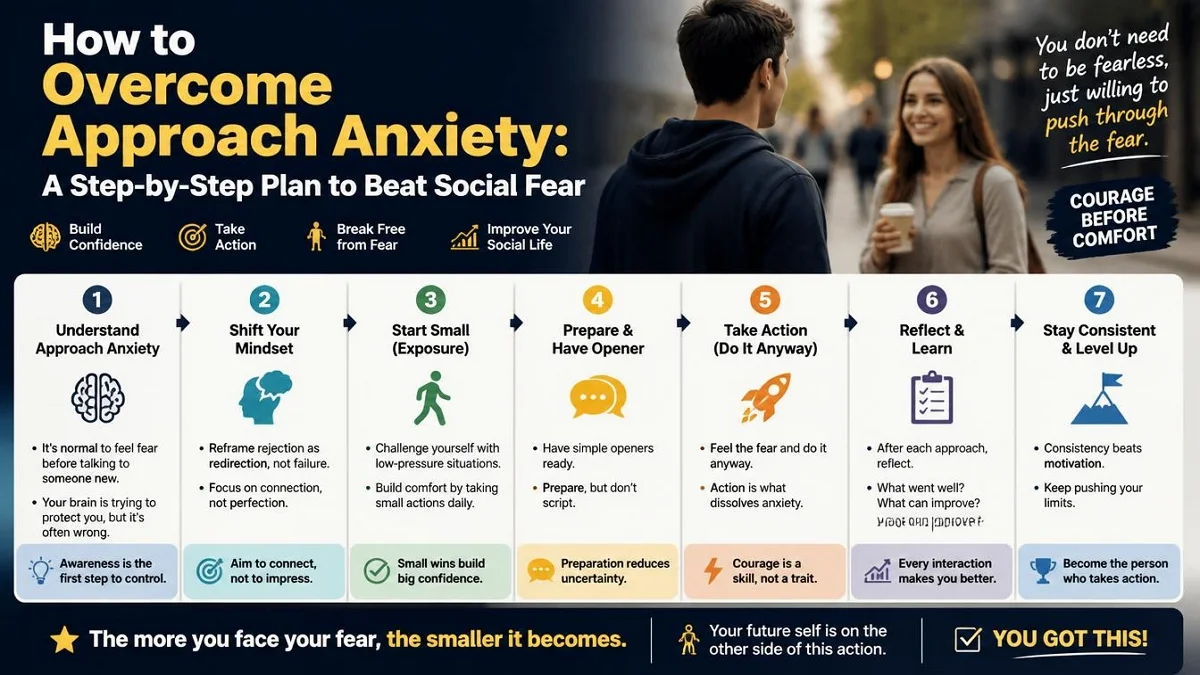
Social anxiety is a state of mind where you feel nervous or afraid in social situations. But there’s a specific, brutal version of it that hits when you’re about to approach someone you’re attracted to — that’s approach anxiety, and it can feel so terrifying that people say: “I would rather die than approach that person.”
What Is Approach Anxiety (and Why Does It Feel Like Emotional Death)?
The answer is simple, but painful: people with social anxiety don’t like themselves at all, and on top of that, they feel they have no chance of being loved. So they feel that literally nobody loves or cares about them. Every time they think about approaching someone, they expect to experience no love — none from themselves, and none from the other person either.
This is extremely painful because we need to feel the emotion of love. It’s not a mere “desire,” it’s an absolute need, just like oxygen.
Why People With Social Anxiety Fear Rejection So Much
When you take a person who doesn’t love themselves and also expects hate from others, they will do anything to avoid meeting people — because they can’t survive that kind of emotional vacuum.
It is emotional death.
That’s how approach anxiety is born. It’s a mechanism your brain uses to protect you from emotional pain.
Of course, most people with social anxiety don’t experience it at such an intense level — they’re still functional. But many people carry a degree of social anxiety they would love to get rid of.
Common Struggles People With Social Anxiety Face
People suffering from social anxiety often struggle with:
- Going to social events
- Being open to love
- Speaking to people they’re attracted to
- Getting stuck in their head all day thinking
- Not being able to have fun
- Not being able to be assertive naturally
- Blushing for no reason
Follow this super solid plan. It doesn’t use fancy new therapies or NLP techniques, but I can guarantee you that if you follow these simple — but hard — steps, within a year you’ll look back and laugh at your current self.
And you know how I can say that with confidence? Because I come from a place of crippling fear, and I still dug my way out with this exact war plan on social anxiety.
Still working on your confidence? Here’s what to read next:
Beginners Guide To Building Self-Confidence and How to Approach Women
The Step-by-Step Plan to Overcome Approach Anxiety
Step 1: Accept That You Fear Rejection
Accept that you are (very) scared to approach people. Many people build a powerful, confident “persona” that they show to others, and they end up believing they’re actually confident — that they only have a little social anxiety.
But you have to accept that you’re just putting up this “persona mask,” and underneath it, you’re experiencing real, deep fear.
Some will say this is too simple to even mention. But it’s easy to overlook, especially because the ego loves to get in the way. And once you truly accept the level you’re actually at, you begin to appreciate the small steps you take to deal with your anxiety.
Step 2: Write Your Goal Down
Now that you’ve accepted you have a real fear of rejection, write down the person you’d really love to be — the one your fear is holding you back from becoming.
We’d all love to be more loving and more at ease with people, but fear chains us down.
Write your goal down: what type of person would you love to be that you currently feel you “can’t”? Maybe you want to be more playful. Maybe you want to be more open or more assertive. Be specific about the type of person you want to become.
Write down the experiences you’d be able to have as this new person. This helps you get clear and focused on your personality goal.
Step 3: Face Your Fears Slowly
Write out small, fear-facing challenges that will take you toward your goal — but take it slow.
The biggest mistake almost everyone makes in personal development is moving too fast. Unless you have a great life coach who knows you well and won’t let you skip ahead, you need to take it slower.
When I was starting out, I began by asking people for directions, and slowly built myself up from there. If I had gone straight for approaching someone I was really attracted to on day one, I would’ve gotten rejected and probably wouldn’t have left my house for a month.
It isn’t easy to take it slow, but that’s part of truly accepting your social anxiety. Deal with it using a long-term mindset, not a rush.
Step 4: Learn Solid Social Skills
Building confidence around patterns of being awkward doesn’t work.
You likely have strong social anxiety because you’ve been getting rejected — or feel like you have been — over and over, to the point where you believe you have no chance of ever being liked. But if you change your strategy, doesn’t it make sense that your results would change too?
So learn and integrate new social skills. Read books, listen to podcasts, take courses — do whatever it takes to learn new ways of connecting with people.
A great starting point is the classic How to Win Friends and Influence People. Once you’ve mastered that, The Art of Seduction by Robert Greene takes things to the next level — both are bestsellers that get to the core of what actually makes someone likable.
Bottom line: being confident and having social skills that make people feel genuinely good around you will earn you love from almost everyone you meet.
Step 5: Take Action
Go out and follow your small, fear-facing challenges alongside your new social skills. Don’t beat yourself up after getting rejected — accept your fear, and understand that rejection is simply part of the process of overcoming social anxiety.
If you’re struggling to accept that rejection will happen along the way to social freedom, go back to Step 1 and re-accept that you’re dealing with real social anxiety.
Keep building your confidence with these reads:
How To Love And Escape Loneliness
Final Thoughts: Your Path to Social Freedom
If you follow this plan, there’s no way you won’t break out of your social fear — but you need to stay persistent, and give yourself plenty of time.
Quick recap of the plan:
- Accept your social anxiety
- Set your goals
- Take on small, fear-facing challenges
- Learn solid social skills
- Face your fears and take action
Try to build yourself a small group of people who support you and hold you accountable to never give up.
The path toward social freedom isn’t easy, so get very clear on why you want to reach your goal. As the saying goes: “He who has a why to live for can bear almost any how.”
It’s not about the specific how — it’s the why, the motivation. And here’s a hint as you find yours: if you’re only growing for yourself, you won’t make it.
Good luck.
FAQ
Is approach anxiety a form of social anxiety? Yes. Approach anxiety is a specific, situational form of social anxiety that shows up when you’re about to talk to someone you’re attracted to. It’s driven by the same root fear — expecting rejection and a lack of love or connection.
How long does it take to overcome approach anxiety? It varies by person, but consistent small steps over several months to a year typically lead to noticeable, lasting change. The key is gradual exposure, not forcing yourself into situations you’re not ready for.
What’s the fastest way to reduce approach anxiety? There’s no real shortcut, but starting with low-stakes social interactions — like asking strangers for directions or making small talk — helps build confidence before working up to approaching people you’re attracted to.
More on overcoming fear and building attraction:
References
- Carnegie, D. How to Win Friends and Influence People. Dale Carnegie, 2022.
- Greene, R. The Art of Seduction. Viking Press, 2001.
- https://socialphobia.org/social-anxiety-disorder-definition-symptoms-treatment-therapy-medications-insight-prognosis
- https://www.webmd.com/anxiety-panic/mental-health-social-anxiety-disorder
About The Author

5 thoughts on “How to Overcome Approach Anxiety: A Step-by-Step Plan to Beat Social Fear”